Fundamental valuation vs. technical momentum for growth stock analysis
Two lenses, one question
Every growth stock presents a puzzle: how much of its future is already priced in, and how much remains to be discovered? Investors approach this puzzle from two distinct directions. One camp starts with the business itself - its earnings, margins, cash flows, and the price it commands for each dollar of those fundamentals. The other camp starts with the market's own behavior - the pattern of price moves, the volume behind them, and the collective mood of buyers and sellers. Both methods can identify opportunities, but they answer different questions and suit different time horizons.
What fundamental valuation reveals
Fundamental valuation asks what a stock is worth based on the company's ability to generate profits and grow them over time. The core tools are familiar to most investors: price earnings ratio, price sales ratio, earnings per share, and measures of revenue growth and margin expansion. For a growth stock, these metrics are rarely cheap. High price earnings multiples are the norm, not the exception, because the market bids up shares in anticipation of future earnings that have not yet materialized.
The real work in fundamental valuation lies in judging whether those high multiples are justified. A stock trading at 40 times earnings might look expensive until you examine the trajectory of its earnings per share over the past three years and the forward estimates from analysts who follow the industry. If revenue growth is accelerating, margins are expanding, and cash flow conversion is strong, the premium may be reasonable. If those same metrics are flat or deteriorating, the multiple becomes a risk.
This is where the phrase "analysis of sustainable earnings growth" enters the picture. A single quarter of beat-and-raise results does not make a growth stock. What matters is whether the company can repeat that performance across multiple cycles, through competitive pressure and changing consumer habits. Sustainable earnings growth depends on durable advantages: a proprietary technology, a network effect, a brand that commands loyalty, or a cost structure that competitors cannot replicate. Without those, a high growth rate can vanish as quickly as it appeared.
What technical price momentum captures
Technical momentum ignores the company's products, management, and financial statements. It focuses entirely on price and volume data. The idea is that trends in price tend to persist because information spreads gradually and because investors herd toward stocks that are already moving. A stock breaking out to new highs on above-average volume may attract more buyers, pushing the price even higher. Conversely, a stock that has stalled or reversed may signal that the easy money has been made.
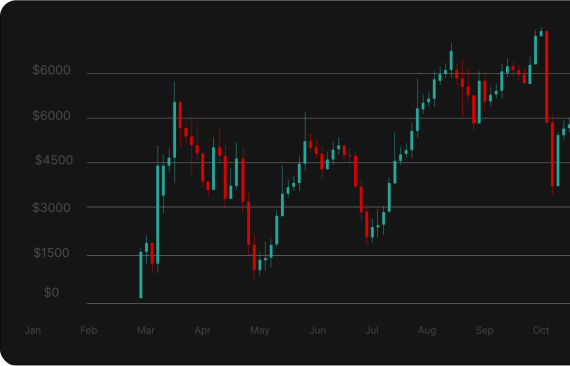
Momentum strategies work best in environments where trends are clear and where the broader market is not in a sharp reversal. For growth stocks, which are often more volatile than value stocks, momentum can amplify both gains and losses. A stock that rises 100 percent in six months can fall 50 percent in the next three, leaving latecomers with significant losses. Momentum traders accept this risk because they aim to ride the trend until it shows clear signs of exhaustion, then exit quickly.
Technical tools include moving averages, relative strength indicators, and volume analysis. A common approach is to buy a growth stock when its 50-day moving average crosses above its 200-day moving average, and to sell when the opposite happens. Another is to look for stocks whose relative strength rank is in the top decile of the market. These signals are mechanical and remove emotional decision-making, which is both their strength and their limitation.
Where the two approaches conflict
Fundamental valuation and technical momentum often point in opposite directions. A stock can have superb fundamentals - rising earnings per share, expanding margins, strong cash flow - while its price is falling. This can happen when the market has already anticipated the good news and is now looking ahead to a slowdown. Alternatively, a stock can have deteriorating fundamentals but a rising price, driven by hype or short covering. In such cases, the fundamental investor sees a trap, while the momentum trader sees an opportunity to profit from the crowd's continued enthusiasm.
Which lens is correct depends on the investor's time frame and risk tolerance. A long-term investor who plans to hold for years cares most about the company's ability to compound earnings. Short-term price swings are noise. For that investor, a stock that is cheap on a price earnings ratio relative to its growth rate, with a strong record of revenue growth and margin expansion, is worth owning even if the chart looks weak. The momentum trader, holding for weeks or months, cannot afford to wait for the market to recognize value. If the price is not moving, the position is dead money, regardless of how attractive the fundamentals appear.
When fundamentals lead, when momentum leads
There are market conditions where one approach clearly outperforms the other. In a bull market driven by rising earnings, fundamental valuation tends to work well because the companies with the best financials eventually get rewarded. In a speculative rally where money is flowing into any stock with a compelling story, momentum can outperform even when earnings are weak. The key is to recognize which regime you are in, and to adapt accordingly.
For an investor focused on growth stock analysis, a hybrid approach often makes sense. Start with the fundamentals to identify a universe of companies that have demonstrated sustainable revenue growth, expanding margins, and solid cash flow. Then apply technical analysis to time entries and exits. This does not guarantee success, but it reduces the odds of buying a stock that looks good on paper but is already in a downtrend.
The phrase "analysis of sustainable earnings growth" is central to the fundamental side of that hybrid. Without it, you are buying stories, not businesses. With it, you have a filter that weeds out companies whose growth is fueled by one-time events, accounting changes, or unsustainable leverage. Once that filter is applied, momentum can help you decide when to act.
Practical considerations for the individual investor
Most individual investors lack the time and data to perform deep fundamental analysis on dozens of stocks. Fortunately, the essential metrics are available on any decent screening platform. Start with revenue growth over the past three years, looking for consistency rather than a single spike. Next, check margin expansion: is the company converting more of each dollar of sales into profit? Finally, look at cash flow from operations. A company that grows earnings per share while cash flow lags is often using aggressive accounting or issuing debt to buy back shares.

On the technical side, avoid chasing stocks that have already made a large move without a pullback. Wait for a consolidation period - a few weeks of sideways trading - and then buy on a breakout above that range. Set a stop-loss based on the stock's average true range or a key moving average. This discipline prevents a momentum trade from turning into a long-term hold by default.
Neither approach is superior in all conditions. The best growth stock investors understand both and know when to lean on each. Fundamental valuation provides the conviction to hold through drawdowns. Technical momentum provides the timing to avoid buying into a peak. Used together, they form a complete framework for navigating the most exciting, and most dangerous, segment of the equity market.